Roof Tank or Direct Feed: Where a Booster Pump Fits in Your Water Setup
Homes in Malaysia usually draw water either from a roof tank or straight from the incoming pipe. Knowing which one you have makes the pump conversation much simpler.
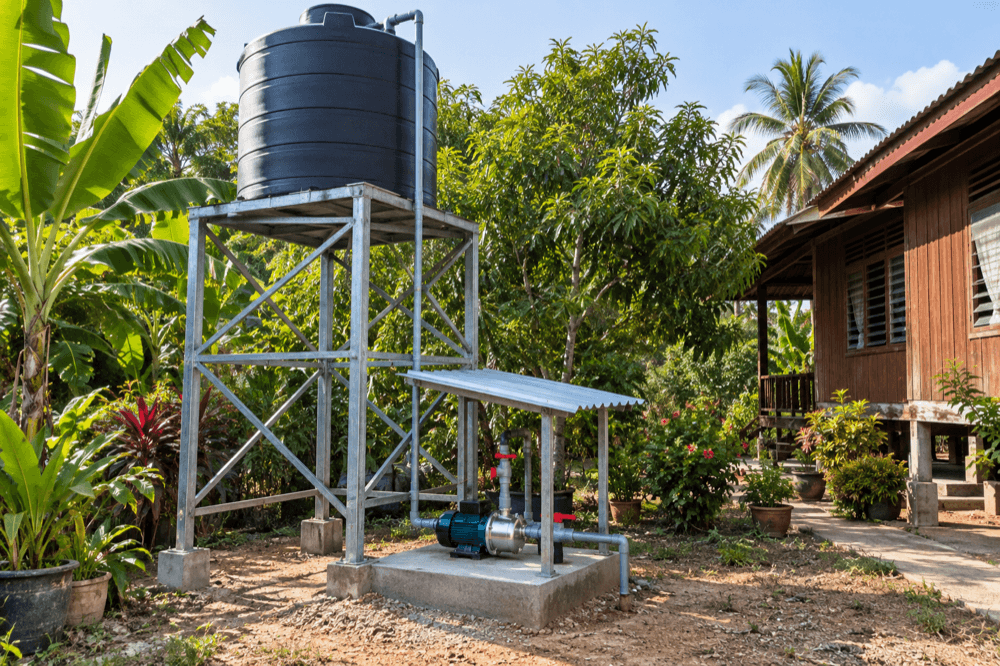
Understanding the two common layouts before you plan a water pump
When someone says "my water pressure is weak", the next question is almost always the same: where does your water come from inside the house? It sounds basic, yet many owners have never looked. The answer shapes where a booster pump goes, how it is connected, and what the installer will want to see in your photos.
Most Malaysian homes and small premises fall into one of two layouts. Some use a mix of both. This article explains each in plain terms so you can recognise yours.
Layout one: the roof tank system
In a roof tank setup, water from the main fills a storage tank placed high up, usually in the ceiling space or on a stand on the roof. From there, gravity carries water down to the taps. Many terrace houses, semi-detached homes and older shoplots work this way.
Why roof tank homes feel weak upstairs
Gravity pressure depends on how far the water falls before it reaches the outlet. A ground-floor kitchen sits far below the tank, so it gets a decent push. An upstairs bathroom sits only a short distance below, so the push is gentle. This is why the upper floor shower is so often the weakest point in a roof tank house, even when the tank is full.
Where the booster pump goes
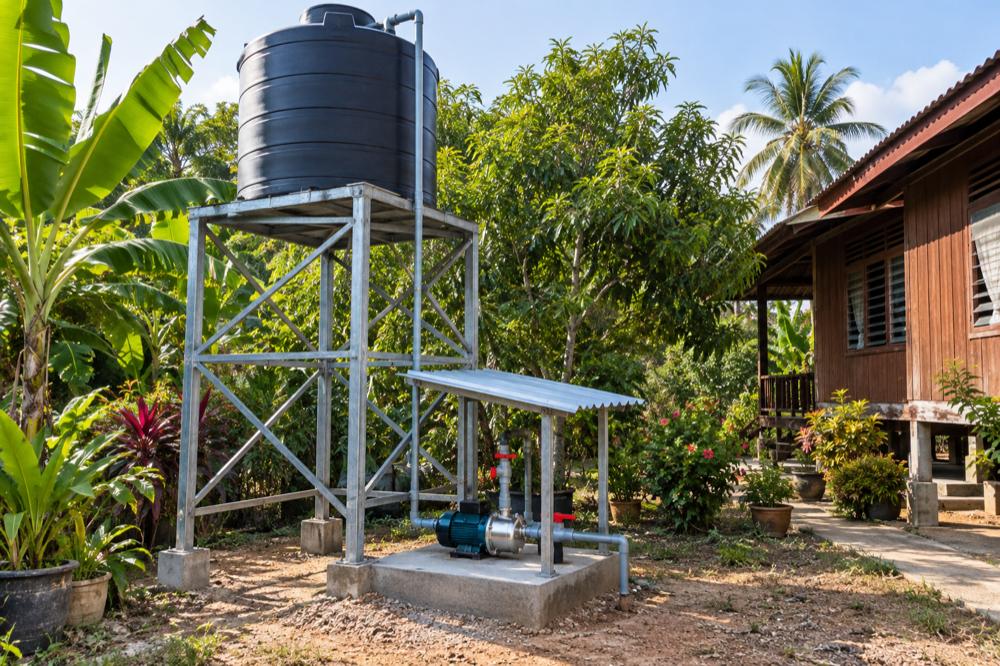
In a roof tank home, the pump is usually connected on the outlet side of the tank, so it draws stored water and pushes it to the bathrooms at a steadier pressure. Depending on the house, it may sit near the tank itself or lower down along the outlet pipe. The right spot depends on access, space and how the pipes are run, which is why photos of the tank area are so helpful.
Layout two: direct feed from the incoming pipe
In a direct-feed setup, taps are supplied straight from the incoming pipe, without passing through a storage tank first. Pressure inside the house then follows whatever the supply delivers at that moment. When incoming pressure is low, every tap feels it.
What to know before adding a pump here
A booster pump on a direct-feed line is a conversation that depends on how your supply is arranged and what your local water operator allows. Some owners in this situation add a storage tank and then a pump drawing from that tank. Rather than assume, send photos of your incoming pipe and meter area and we will talk it through with you on WhatsApp before suggesting anything.
Mixed setups are common
Many houses have been renovated more than once, and the plumbing reflects it. A kitchen might be on direct feed while bathrooms run from the tank. An extension at the back may have its own line. If you are not sure which tap is fed from where, that is fine. A few clear photos usually reveal it.
How to tell which layout you have
- Look for a tank. Check the ceiling hatch, the roof, or a stand at the back of the house. A tank with pipes running down is a strong sign of a gravity layout.
- Follow the pipes. Trace the pipe from your water meter. Does it go up towards a tank, or straight into the house?
- Compare floors. If upstairs is clearly weaker than downstairs, a gravity tank is often involved.
- Note any existing pump. If there is already a pump, photograph it and the pipes on both sides.
What this means for choosing the pump
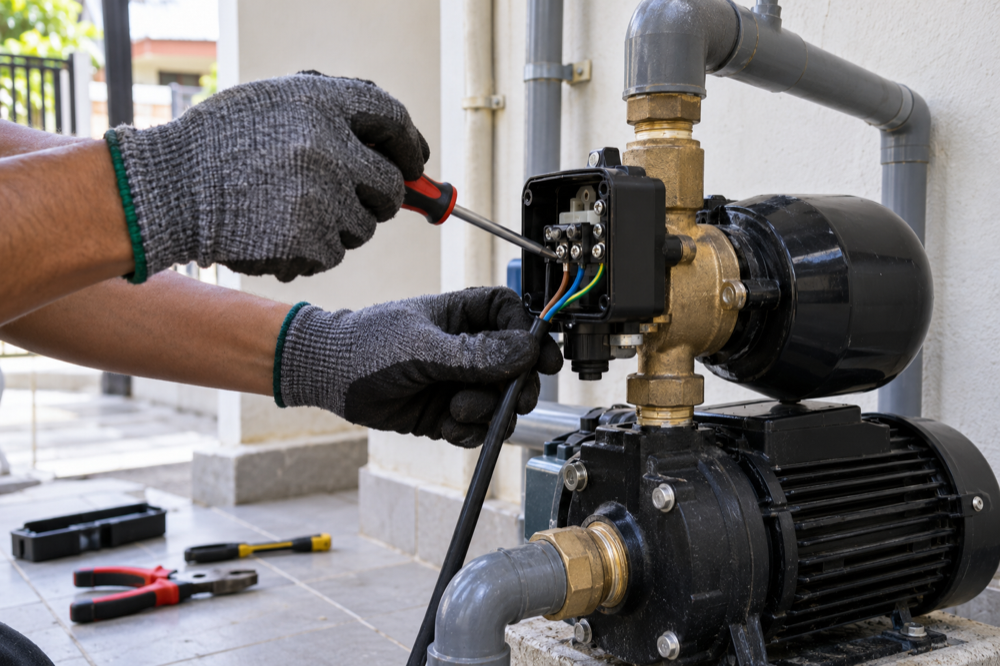
Once the layout is clear, choosing the size becomes easier. Taller houses and more bathrooms used together usually lean towards a higher HP; a single-storey home with modest use may need less. We supply Tsunami and Grundfos booster pumps in 0.50HP, 0.75HP and 1.00HP. You can browse them in our pump catalogue and compare the two brands in our comparison table.
| Brand | 0.50HP | 0.75HP | 1.00HP |
|---|---|---|---|
| Tsunami (supply and installation, per unit) | RM1,800 per unit | RM2,000 per unit | RM2,200 per unit |
| Grundfos (supply and installation, per unit) | RM3,600 per unit | RM3,800 per unit | RM4,000 per unit |
Every price above includes the pump, installation, basic wiring, and pressure and function testing. If your layout needs pipe modification, extra wiring or removal of an old pump, those are quoted separately and confirmed with you before the day.
Already bought a pump? Installation only is RM800 per unit, installation only, for the customer's own pump.
Enquiries from any state
Whether your home is in Petaling Jaya, Ipoh or Seremban, the first step is the same: photos and location. Scheduling and any extra charges for your area are confirmed on WhatsApp.
Not sure which layout you have? Send photos of your tank, meter and pump area, and we will help you read it: Send Your Photos.