Where to Place a Water Pump: Noise, Ventilation, Rain and Access
The right pump in the wrong place can still be a nuisance. Here is how to think about noise, airflow, rain and access when choosing where your water pump goes.
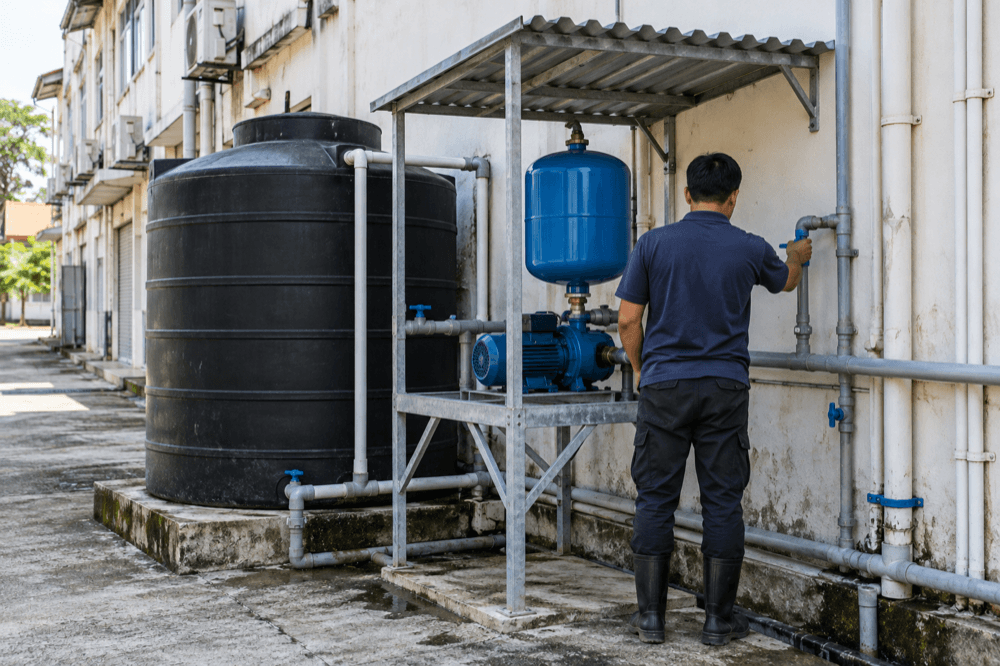
Choosing a spot that works for the pump, the household and the neighbours
Most conversations about a water pump focus on horsepower and brand. Placement gets less attention, yet it affects daily life just as much. A pump mounted outside a bedroom window, in a spot that floods in heavy rain, or squeezed into a corner nobody can reach, can turn a good purchase into an ongoing irritation.
This guide walks through the main things to weigh. In many homes there is no perfect spot, only a sensible balance, and photos help us find it with you.
Noise: think about who is nearby
Every booster pump makes some sound when it starts and runs. How noticeable that is depends a lot on where it sits.
Bedrooms and living areas
Avoid mounting the pump directly against a bedroom wall or under a window where people sleep, if another option exists. Pumps often start at night when someone uses a toilet or tap, and a quieter location makes that far less noticeable.
Neighbours
In terraces and shoplots, the side lane or back wall may be shared with the next unit. A spot slightly further from a neighbour's window is a small courtesy that avoids friction later.
Hard surfaces
Sound can travel through walls and pipes. A firm, level mounting point and properly supported pipes help keep vibration down.
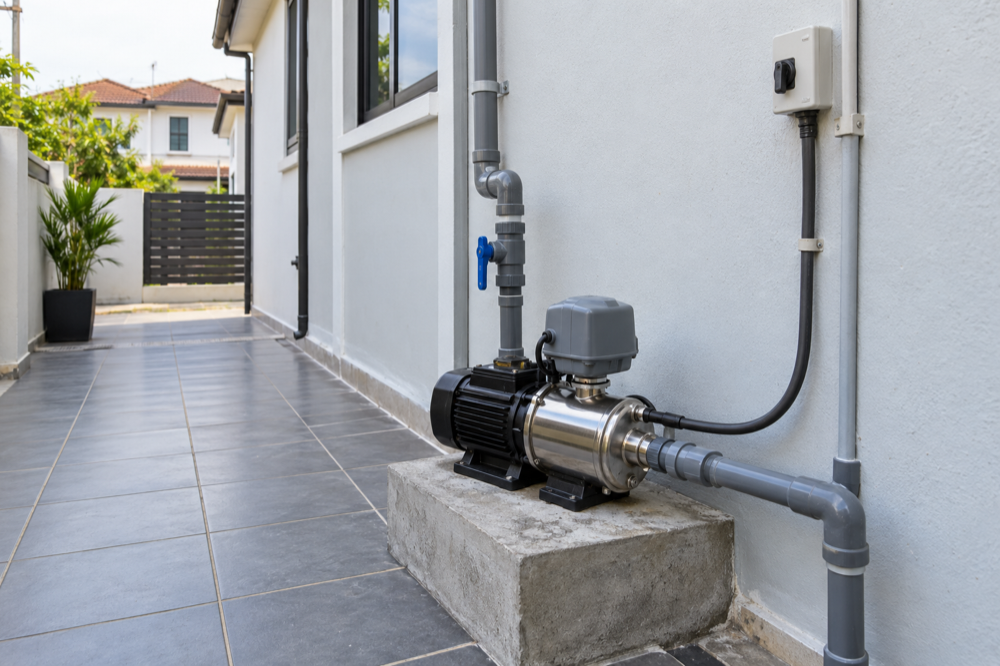
Ventilation: let the motor breathe
A pump motor produces heat when it runs. A closed cupboard, a tight box with no openings, or a cramped ceiling space can trap that heat. If the pump needs a cover, it should still allow airflow around the motor. Mention any enclosure you are planning, and include it in your photos.
Rain, sun and water on the floor
- Rain. Many pumps sit outdoors, which is normal, but a spot under an eave or a simple cover is preferable to one in the open where rain beats down on it.
- Direct sun. Long hours of strong afternoon sun on the pump and its cable are worth avoiding where possible.
- Standing water. Areas that flood during storms are a poor choice. A raised mounting point or a different spot keeps the pump clear of puddles.
- Drainage. A floor trap or drain nearby is useful when testing or servicing, since some water may be released.
Access: plan for the next visit, not just the first
A pump that cannot be reached is a pump that does not get looked at. Leave enough space around it for a technician to work with tools, and avoid spots that require moving heavy furniture, climbing onto a fragile roof, or unbolting a cabinet to get to it.
In shoplots, consider who holds the key to the back door or rooftop. If the pump sits behind a locked area, servicing becomes harder to arrange.
Power and pipes: the practical constraints
The pump needs to be close to the water line it boosts and to a suitable power point. Moving it far from either may mean extra work. Basic wiring is included in the installation price; extra wiring is quoted separately. In the same way, if the ideal spot needs the pipes rerouted, pipe modification is quoted separately. Sometimes a slightly less ideal spot with a straightforward connection is the more practical choice, and we will talk that trade-off through with you.
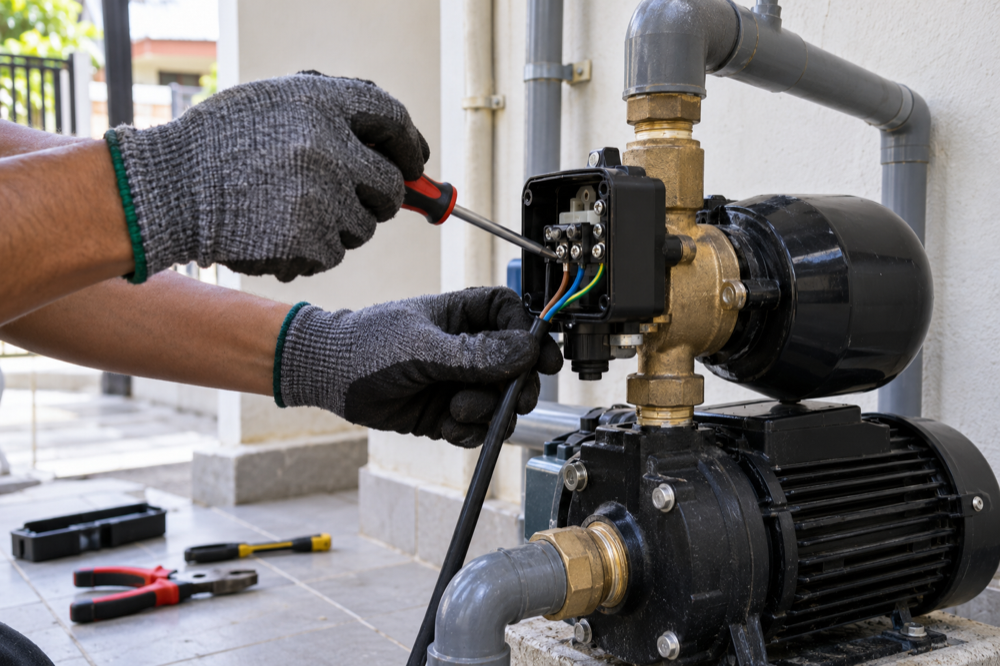
A quick placement checklist
- Away from bedroom walls and neighbours' windows where possible.
- Airflow around the motor, even if covered.
- Sheltered from direct rain and long hours of strong sun.
- Clear of standing water, ideally near a drain.
- Enough room for a technician to work.
- Close to the water line and a suitable power point.
Placement and price
Placement does not change the package price; it can affect whether extra work is needed. Supply and installation is per unit: Tsunami RM1,800 per unit for 0.50HP, RM2,000 per unit for 0.75HP and RM2,200 per unit for 1.00HP, supply and installation; Grundfos RM3,600 per unit for 0.50HP, RM3,800 per unit for 0.75HP and RM4,000 per unit for 1.00HP, supply and installation. Installation only, for your own pump, is RM800 per unit, installation only. See the full range in our pump catalogue and the brand comparison.
Across Malaysia
We take enquiries from all states, including Kajang, Ipoh and Kuching. Scheduling and any extra charges are confirmed on WhatsApp.
Not sure where your pump should go? Send photos of two or three possible spots and we will help you choose: Ask on WhatsApp.